

We Have Crossed the 1.5-Degree Threshold!
Adapting cities to climate change requires a range of innovative and holistic approaches. Although the transformation is costly in the short term, administrators should know that disasters will be even more costly.
What Is Global Warming?
Global warming refers to a long-term and continuous rise in the average temperatures at the Earth's surface. This process has accelerated especially since the industrial revolution, as human activity has rapidly increased the amount of greenhouse gases (carbon dioxide, methane, nitrous oxide, etc.) released into the atmosphere.
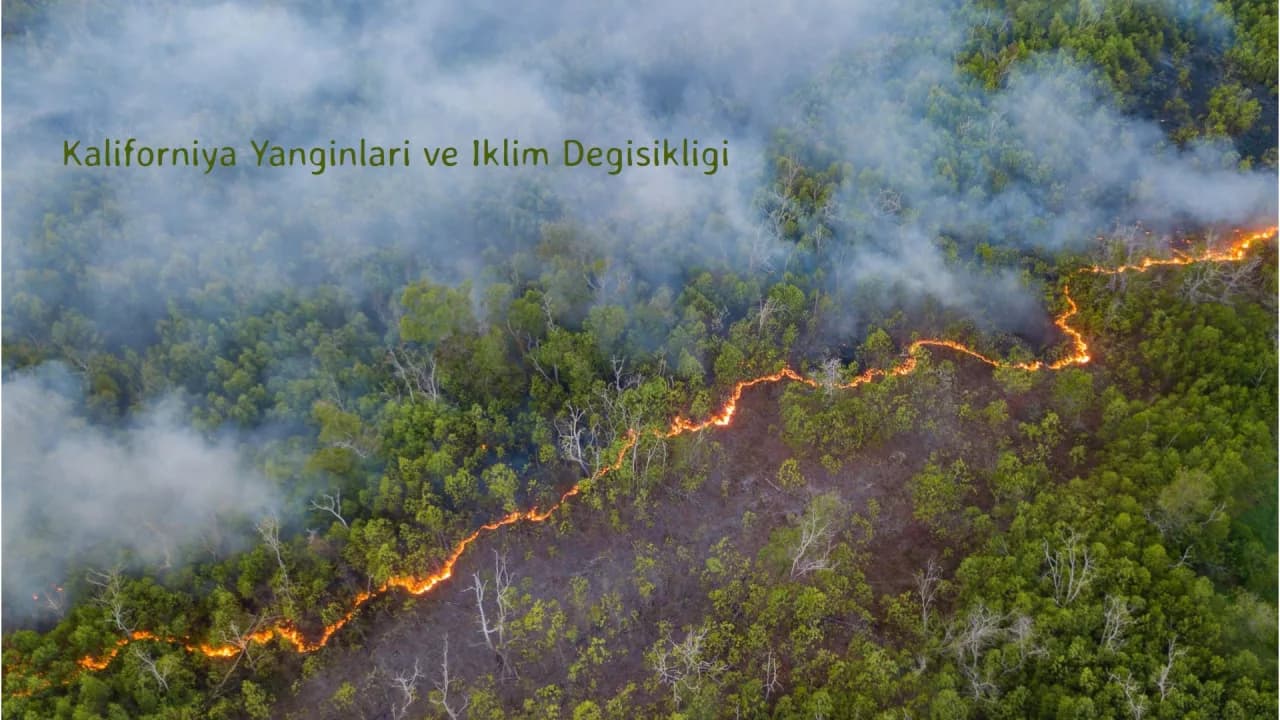
The California Wildfires
In January 2025, major wildfires broke out around Los Angeles (USA). As of the time this article was written, NASA FIRMS data showed that an area of roughly 13,000 hectares had been affected by the fire. To better understand these areas, we can look at our map:

Source: NASA FIRMS (firms.modaps.eosdis.nasa.gov)
However much teams intervene from the air and the ground to put out the fire, it remains insufficient. The shortage of water in the firefighting effort also became a subject of debate in the American public. So why can't this fire be extinguished, and why has it spread so fast? The answer is actually simple: wind and changing vegetation. Under normal conditions we can predict wind direction and vegetation to a certain extent; but with climate change, the winds, weather events and vegetation we expect are shifting. As a result, tracking and forecasting them is also becoming increasingly difficult.

Source: NASA FIRMS (firms.modaps.eosdis.nasa.gov)
Looking at the progress of the last 24 hours, we see that the fire is still continuing at a serious scale. The climate crisis is no longer a distant future scenario — it has already knocked on our door. Under the Paris Agreement, countries pledged to keep the rise in global temperature below 2°C compared to pre-industrial levels and, if possible, to stay close to the 1.5°C threshold. According to Copernicus and World Meteorological Organization data, 2024 was the first calendar year in which the global average temperature rose above 1.5°C relative to the pre-industrial period. Although the threshold in the Paris Agreement refers to a long-term average, we have reached this limit, and we are observing its effects now, not years from now.
Wildfires from an Urban Planning Perspective, and Prepared Cities
We see in the news that the authorities struggle to evacuate settlements and to access the burning areas. If such difficulties arise even in a country like the USA, which has wide roads, we must certainly plan our cities in light of the risks brought by climate change.

Image: from Zafer Doğan’s LinkedIn article
Besides economic losses, climate change and wildfires also cause;
1. An Increase in Extreme Weather Events
- Heatwaves and droughts: Average temperatures rising above 1.5°C can lead to more frequent and more severe heatwaves. This in turn has adverse effects on agriculture, energy and public health.
- Heavy rainfall and floods: As the atmosphere holds more water vapour, heavy rainfall and flooding may increase. Infrastructure and agricultural land can suffer serious damage from these extreme weather events.
2. Rising Sea Levels
- Glaciers and polar regions: Faster melting of glaciers in the polar regions raises sea levels. This poses a major threat to the millions of people living along coastlines and in low-lying areas.
- Saltwater intrusion: As sea levels rise, agricultural land and freshwater sources in coastal areas are exposed to saltwater intrusion, creating problems for drinking water and agricultural irrigation.
3. Ecosystem and Biodiversity Losses
- Coral reefs: Rising temperatures and ocean acidification can cause large-scale destruction of coral reefs. Coral reefs host a significant part of marine life and are of critical importance for fisheries.
- Wildfires and forest ecosystems: Higher temperatures and decreasing humidity cause forests to dry out and large wildfires to occur more frequently. This destroys the habitat of many living creatures.
4. Economic and Social Impacts
- Food security: Agricultural crops come under major risk from temperature, rainfall patterns and pests. This can raise food prices and create serious problems, especially for low-income communities.
- Migration and displacement: Because of climate-related disasters (floods, droughts, sea level rise, etc.), more people may be forced to migrate to safe areas; this can lead to social and political tensions on a global scale.
5. Health Impacts
- Heatwaves: Extreme temperatures can pose a life-threatening risk, especially for the elderly and for people with chronic illnesses.
- Vector-borne diseases: The expansion of the habitats of vectors such as mosquitoes or ticks can increase the risk of the spread of diseases such as malaria, dengue fever and Lyme disease.
What Should Prepared Cities Look Like?
Transportation:
Locating housing, workplaces, shopping and social spaces within the same area both shortens travel distances and increases the use of public transport, thereby reducing energy consumption and emissions.
Expanding Green and Blue Infrastructure:
Urban green areas (parks, urban forests, groves) and water areas (ponds, streams, urban waterways) absorb carbon while also acting as a buffer against climate risks such as extreme heat, floods and inundation. Afforested areas improve air quality and reduce flood risk by making it easier for rainfall to infiltrate the soil.
Disaster-Focused Planning:
Early warning systems, well-coordinated evacuation plans and multi-purpose shelters must be part of urban planning in order to prepare for extreme weather conditions such as rising heatwaves, storms and floods. The materials used in infrastructure and buildings must also be resistant to such disasters.
Participatory Planning
For a city's climate-friendly policies to succeed, the involvement not only of municipalities but also of civil society, academia and the private sector is essential. Education and awareness programmes that raise climate awareness across every segment of society should be organised, and the public should be included in decision-making mechanisms.
Summary
Adapting cities to climate change requires a range of innovative and holistic approaches. Resilience-focused designs, strengthened green and blue infrastructure, and advanced technologies and sustainable practices in energy and water management form a strong line of defence against the climate crisis. Although the transformation is costly in the short term, administrators should know that disasters will be even more costly.
Zafer Doğan
Source
Fire Information for Resource Management System (NASA FIRMS)
Washington Post, BBC, Guardian
This article was first published on LinkedIn: Zafer Doğan — We Have Crossed the 1.5-Degree Threshold!
This article has been prepared for general information purposes only and does not constitute legal, financial, technical or other professional advice. Legislative and technical information reflects the position as at the date of publication. Short extracts may be quoted provided that the source is cited and a link to the article is given; publication of the article in full or of a substantial part of it is subject to written permission. Terms of use