

SERIES · Disaster preparedness notes
Is the assembly area big enough? First look at who decides, and by what measure
Municipalities designate assembly areas according to criteria set out by AFAD. Space per person is a separate measure, tracked at city scale.
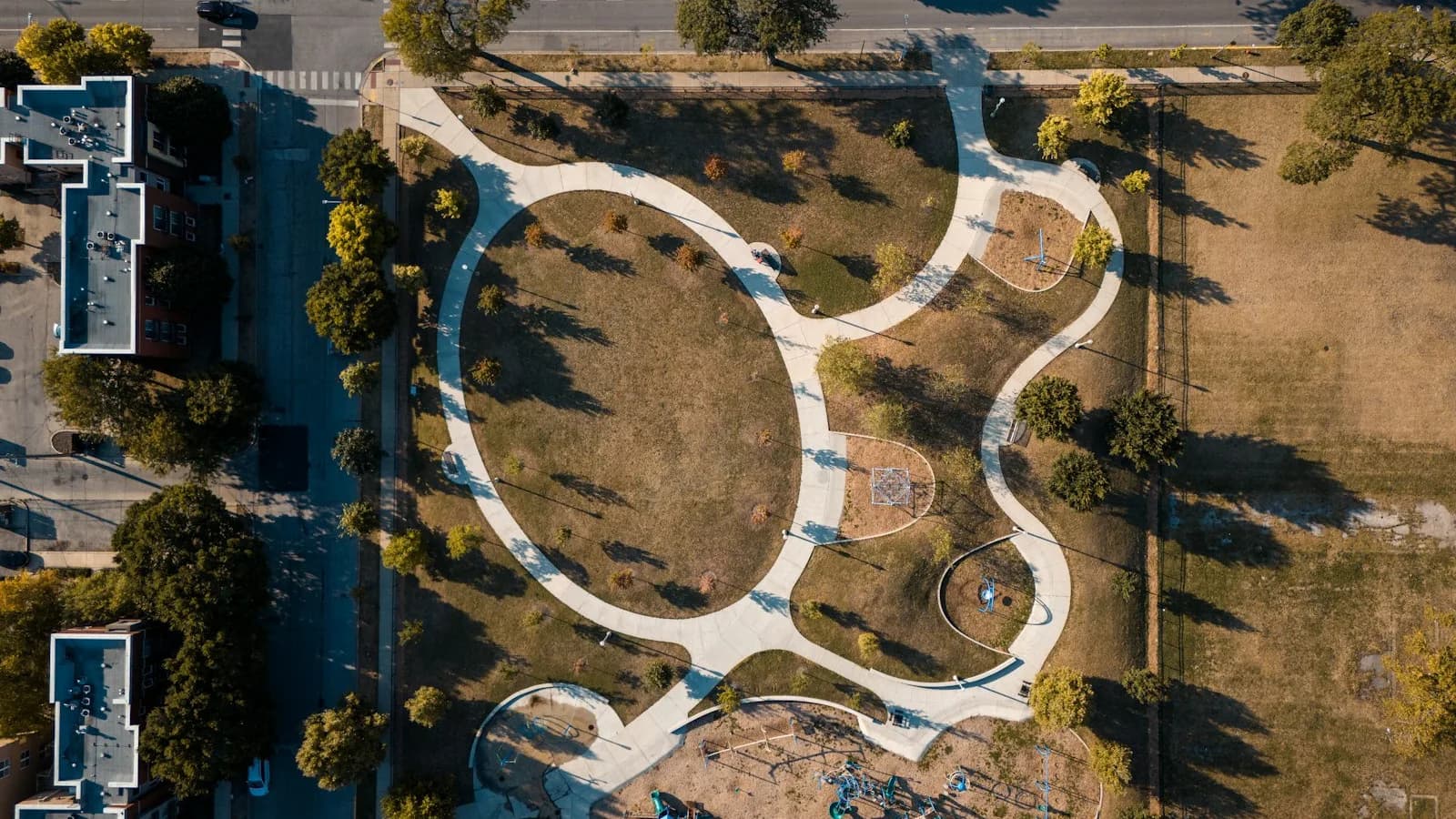
Cover · Photo: Willian Justen de Vasconcellos · Unsplash License
IN SHORT
- 01Municipalities designate disaster and emergency assembly areas according to seven criteria stated by AFAD; residents can look up their own area on e-Devlet.
- 02The criteria cover more than size: access, suitability for older and disabled people, and distance from secondary hazards.
- 03In 2020 the Istanbul provincial AFAD directorate announced a goal of raising the city-wide average of 1.29 m² per person to above 2 m².
What an assembly area is for
In AFAD’s definition, assembly areas are safe places where people can gather away from the danger zone after a disaster, to prevent panic and allow reliable exchange of information until relief teams are ready. They are not the same as shelter or evacuation areas, and are designated by different criteria.
The distinction matters: an assembly area is not somewhere to stay, but the meeting point for the first hours. Its adequacy should be judged against that job.
Who decides, and by which criteria
According to AFAD, assembly area locations are designated by the relevant municipality according to seven criteria. Article 53 of Municipal Law No. 5393 also tasks municipalities with preparing the necessary emergency plans for fires, industrial accidents, earthquakes and other natural disasters, teams and equipment, taking local characteristics into account.
The Istanbul provincial AFAD directorate’s statement of 15 November 2020 lists the criteria as follows:
- Population density in the area
- How easily the area can be reached and evacuated
- Accessibility, as far as possible, for disabled and older people
- Distance from secondary hazards
- Location on level, even ground where possible
- Close to housing, but out of reach of structural and non-structural hazards
- Proximity to facilities that can meet basic needs such as electricity, water and toilets

Photo: Nerea Martí Sesarino · Unsplash License
How many square metres per person
The same statement puts the Istanbul-wide average at 1.29 m² of assembly area per person, with a goal of raising it above 2 m². According to the statement, new or strengthened school yards meeting minimum standards were also being designated as assembly areas for this purpose.
The statement also reports 3,021 assembly areas in Istanbul and 18,910 nationwide at the time. These figures date from 2020; for the current picture, check the institutions’ own announcements.
“An assembly area’s adequacy is not a single number: its size, who can reach it and how fast, and how the ratio is calculated must be read together.”
Making the measure visible
In our view, space per person depends on which population goes into the denominator: the whole neighbourhood, or those who can reach the area on foot in reasonable time? That is why “ease of access” in the criteria cannot be separated from the area calculation.
A map showing this ratio should also state which population, which date’s data and which measure it uses. Readers should be able to see not just the result, but how it was built.
What this article does not say
- It does not declare any assembly area “adequate” or “inadequate”.
- The official source for finding your own assembly area is e-Devlet.
- It is not emergency guidance; follow AFAD for current announcements.
Sources
Disaster preparedness notes
1 / 2
- 1Is the assembly area big enough? First look at who decides, and by what measureYOU ARE READING
- 2Building in stream beds: how regulation reads the mapAugust 29, 2026
This article has been prepared for general information purposes only and does not constitute legal, financial, technical or other professional advice. Legislative and technical information reflects the position as at the date of publication. Short extracts may be quoted provided that the source is cited and a link to the article is given; publication of the article in full or of a substantial part of it is subject to written permission. Terms of use